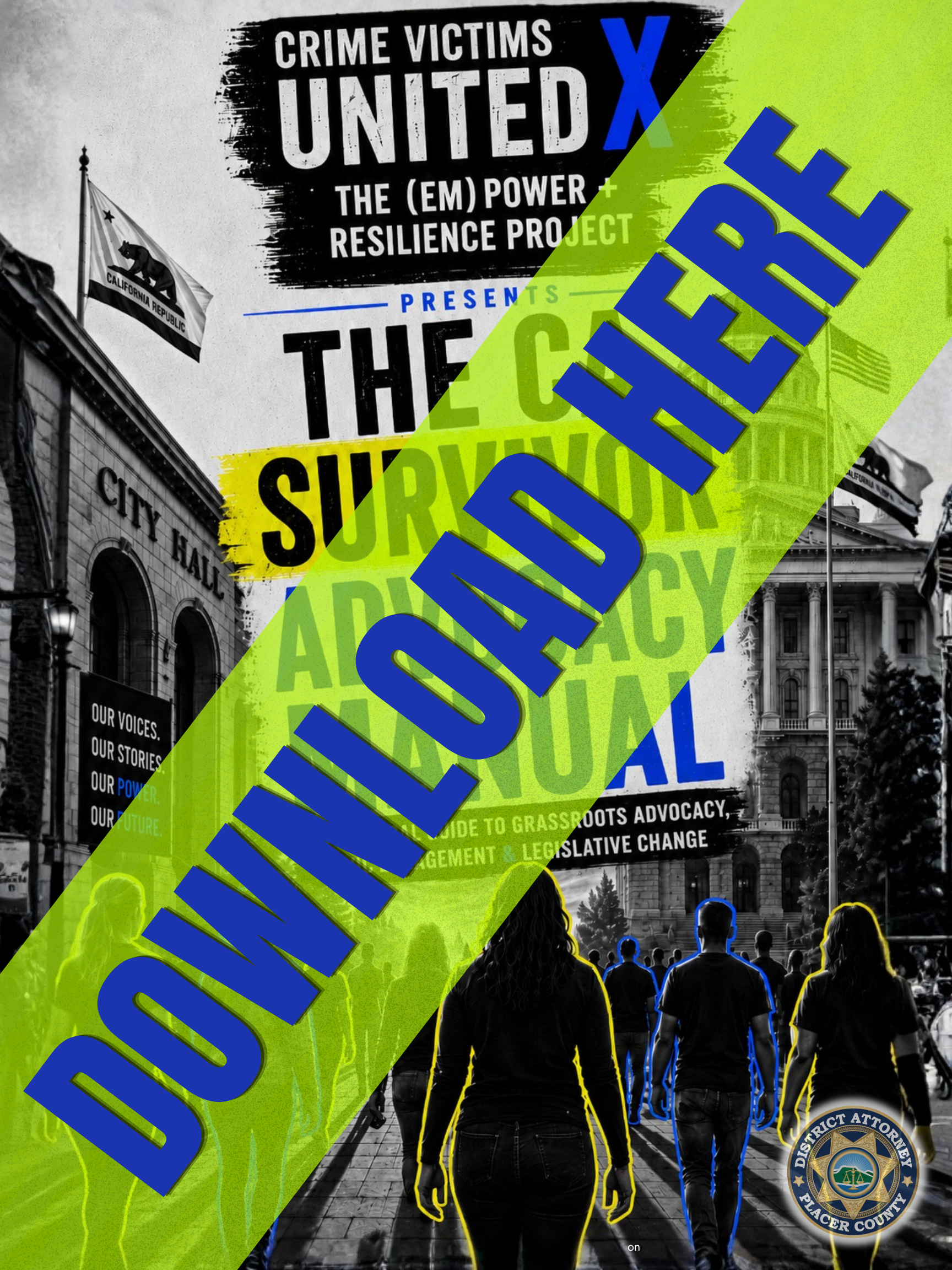

Your Story Has Power. Your Voice Can Create Change.
A free, practical guide to help California victims, survivors, families and everyday residents turn lived experience into organized action.
Every day in California, decisions are being made that affect victims, survivors, families and communities.
Some happen at a city council meeting. Others happen during county budget hearings. Some happen inside the California State Capitol as legislation moves through committees, negotiations and floor votes.
And surrounding many of those decisions is an enormous advocacy infrastructure.
Well-funded special interest organizations have professional lobbyists, policy teams, communications staff, statewide networks, and millions of dollars flowing through organizations dedicated to influencing public policy.
The everyday survivor doesn't have that.
The mother who lost a child doesn't have a team of lobbyists. The crime victim trying to understand a bill doesn't have a legislative affairs department. The family preparing for another parole hearing doesn't have a multimillion-dollar advocacy operation behind them.
The resident who simply believes something happening in their community is wrong may not even know where to begin.
But they have something money cannot manufacture: their voice, their story, their community, and one another.
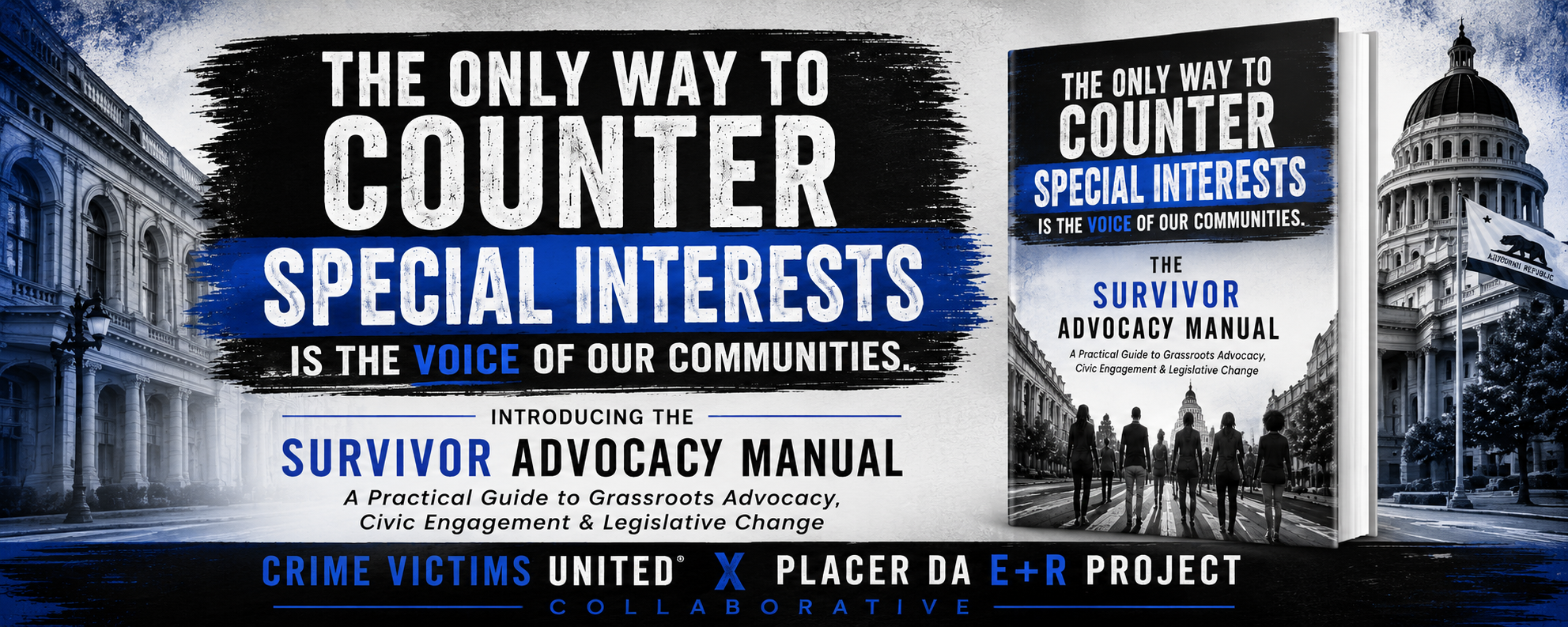
Compiled through the past decades of advocacy knowledge from CVU, paired with the past years of training from the Placer County District Attorney's Office's (Em)Power + Resilience Project for the new era of activism, the manual brings together firsthand experience, lessons learned, and practical advocacy strategies into one accessible resource. The workbook helps participants move from identifying the issue they care about to building a personalized advocacy action plan.
History rarely changes because people waited for the perfect moment. It changes because ordinary people decided the status quo was no longer acceptable—and acted. Again and again, we've seen the same truth: meaningful change doesn't happen on its own. It happens because someone is willing to push.
That is why we created the Survivor Advocacy Manual. We are so glad you are here - and we are just getting started.